AuDHD
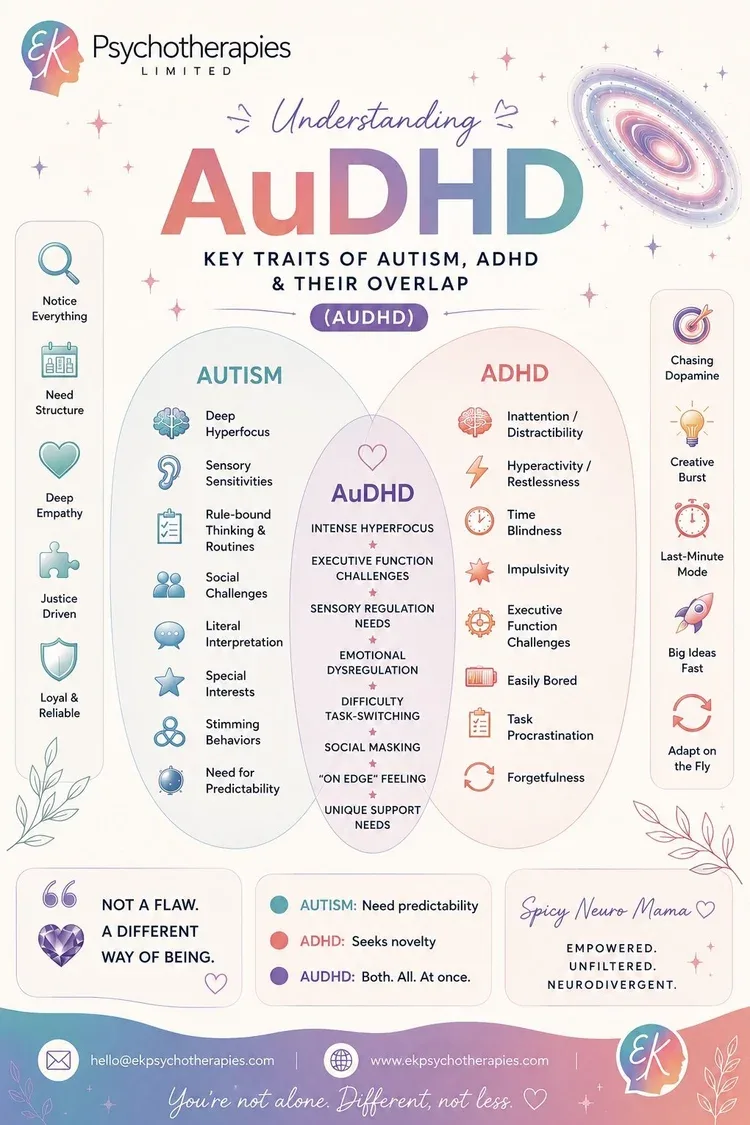
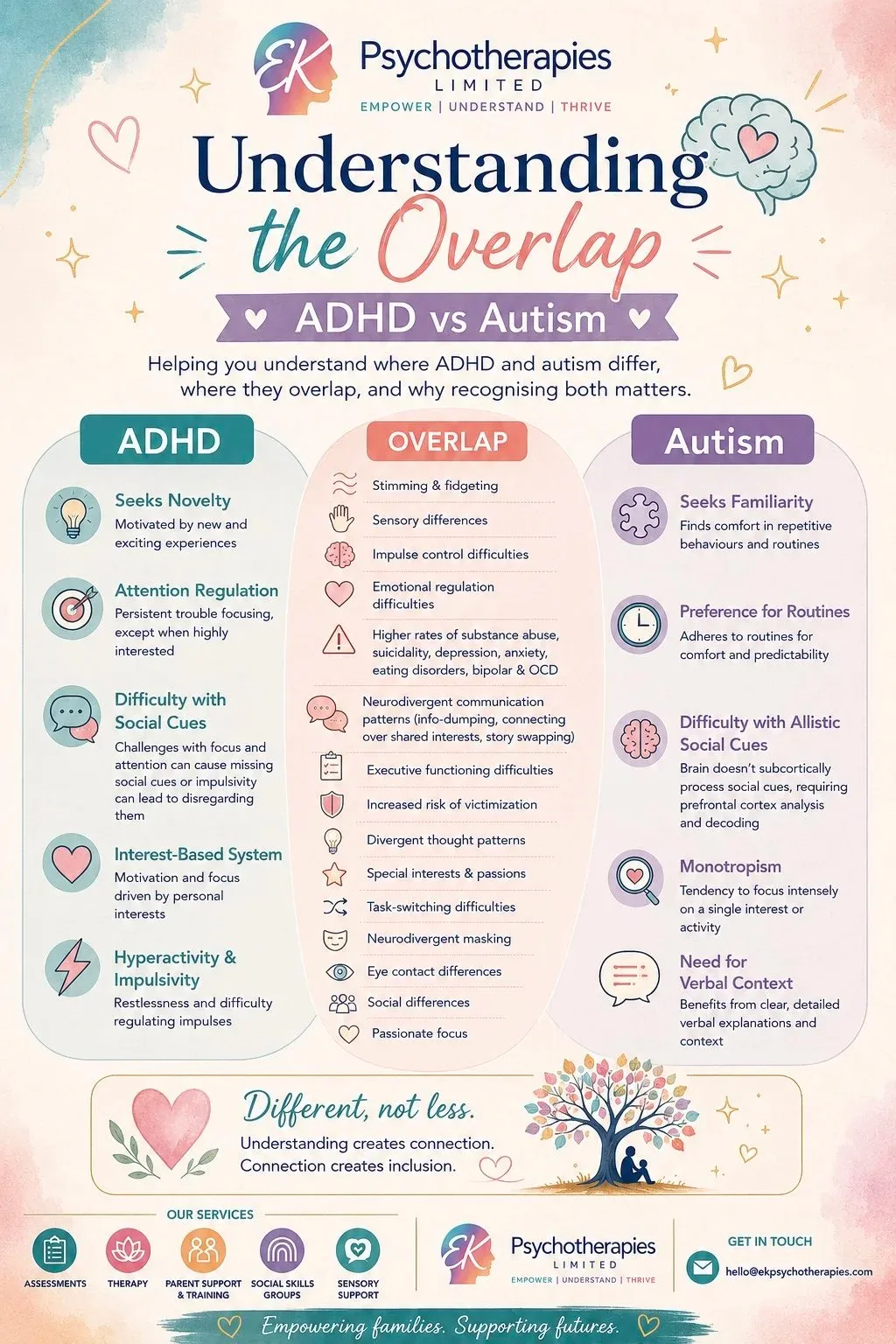
Understanding the Overlap: ADHD vs Autism
Where ADHD and autism differ, where they overlap, and why recognising both matters.
Download infographic
Videos, infographics and guides to help you understand neurodiversity and manage your wellbeing.
01:41 Animation & Family Resource
A child-friendly resource and 01:41 animation focused on understanding anxiety, made for families to use together.
The Monster Inside is also available as two books, on Amazon:
Made for families to use together.
Animation · 1:41
Written by Elisha Kemp, Founder and Director
If you've wondered whether what you recognise in yourself or your child points to ADHD, autism or both, start here.
Short videos in which Elisha Kemp explains neurodivergence, ADHD, CBT and EMDR, and how we support wellbeing at work.
Elisha explains Cognitive Behavioural Therapy: how our thoughts, feelings and behaviours connect, and how CBT can help with anxiety and depression.
Video · 1:07
What ADHD is, what an ADHD assessment involves, and how a diagnosis can open the door to support such as behavioural interventions and psychotherapy.
Video · 1:06
How Eye Movement Desensitisation and Reprocessing uses bilateral stimulation to help people process distressing memories.
Video · 1:33
How natural variation in the brain and nervous system leads to differences in thinking, learning and behaviour, including ADHD, autism and dyslexia, and why recognising it makes society more inclusive.
Video · 1:05
How promoting wellbeing at work benefits both employees and the organisation, from higher engagement to people wanting to stay.
Video · 1:03
Training tailored to the needs of your business: leadership development, communication skills, neurodivergence, mental health awareness and team collaboration.
Video · 1:01
Where ADHD and autism differ, where they overlap, and why recognising both matters.
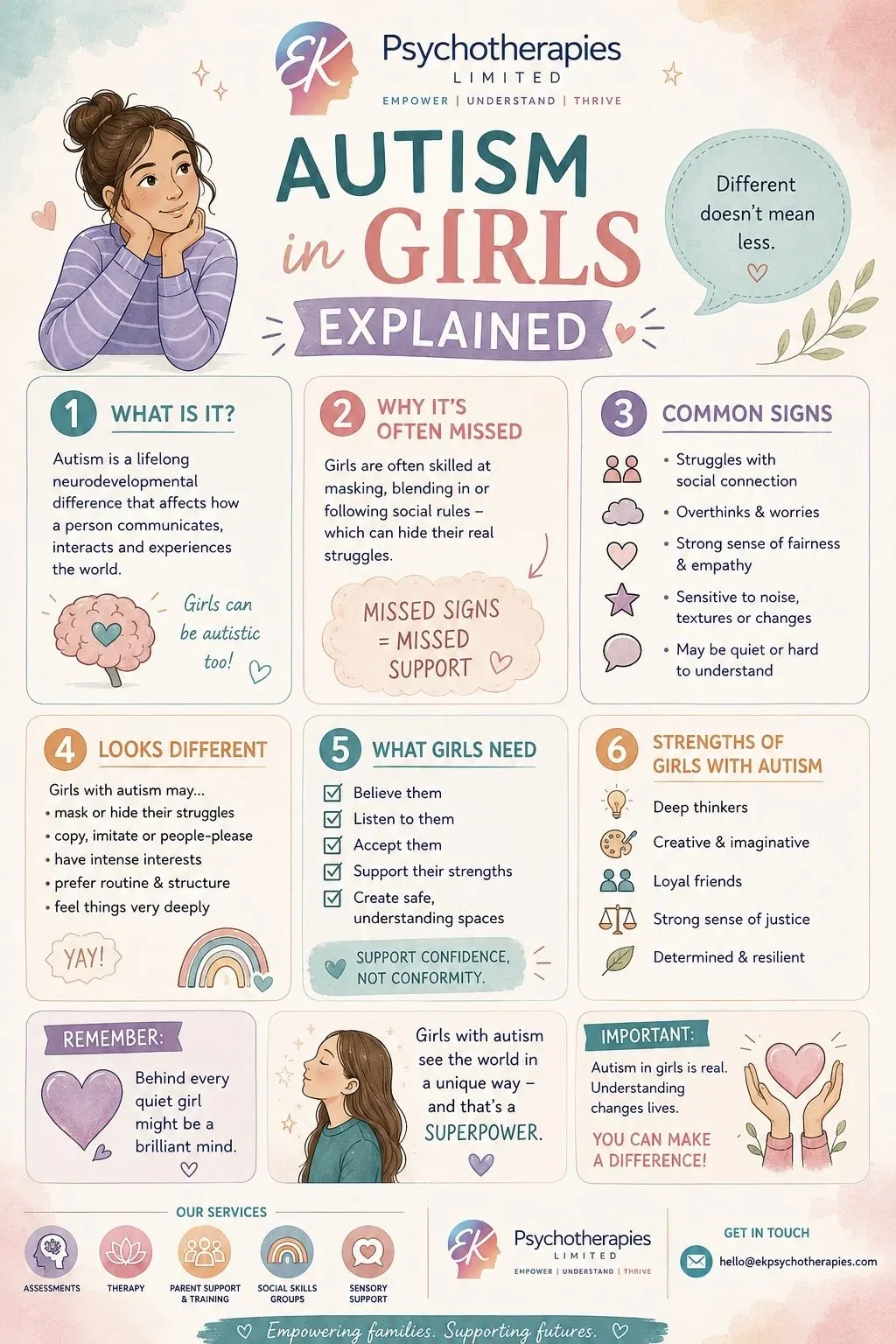
Download infographicWhat autism in girls looks like, why it is often missed, and the common signs.
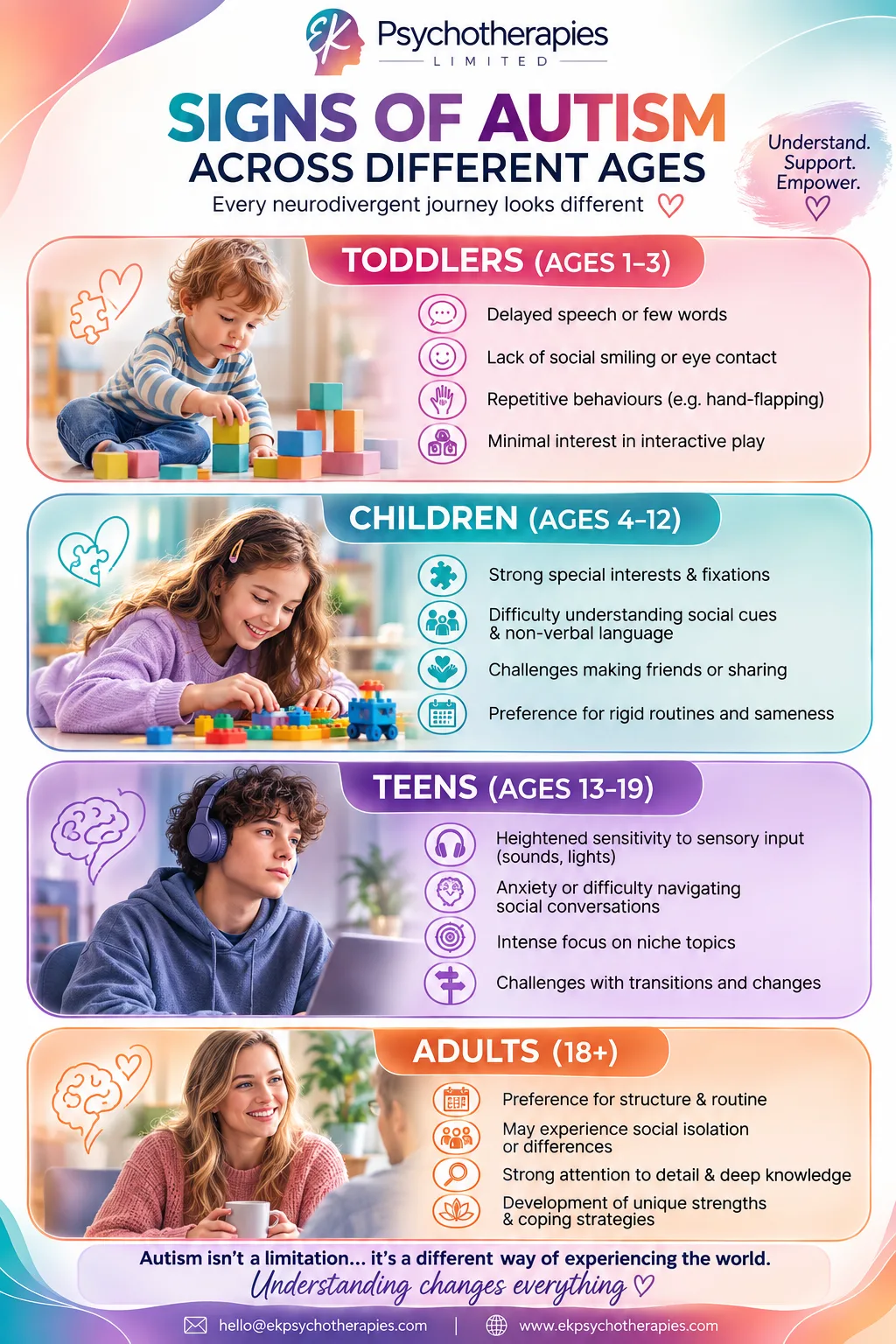
Download infographicHow autism can show up in toddlers, children, teens and adults. Every neurodivergent journey looks different.
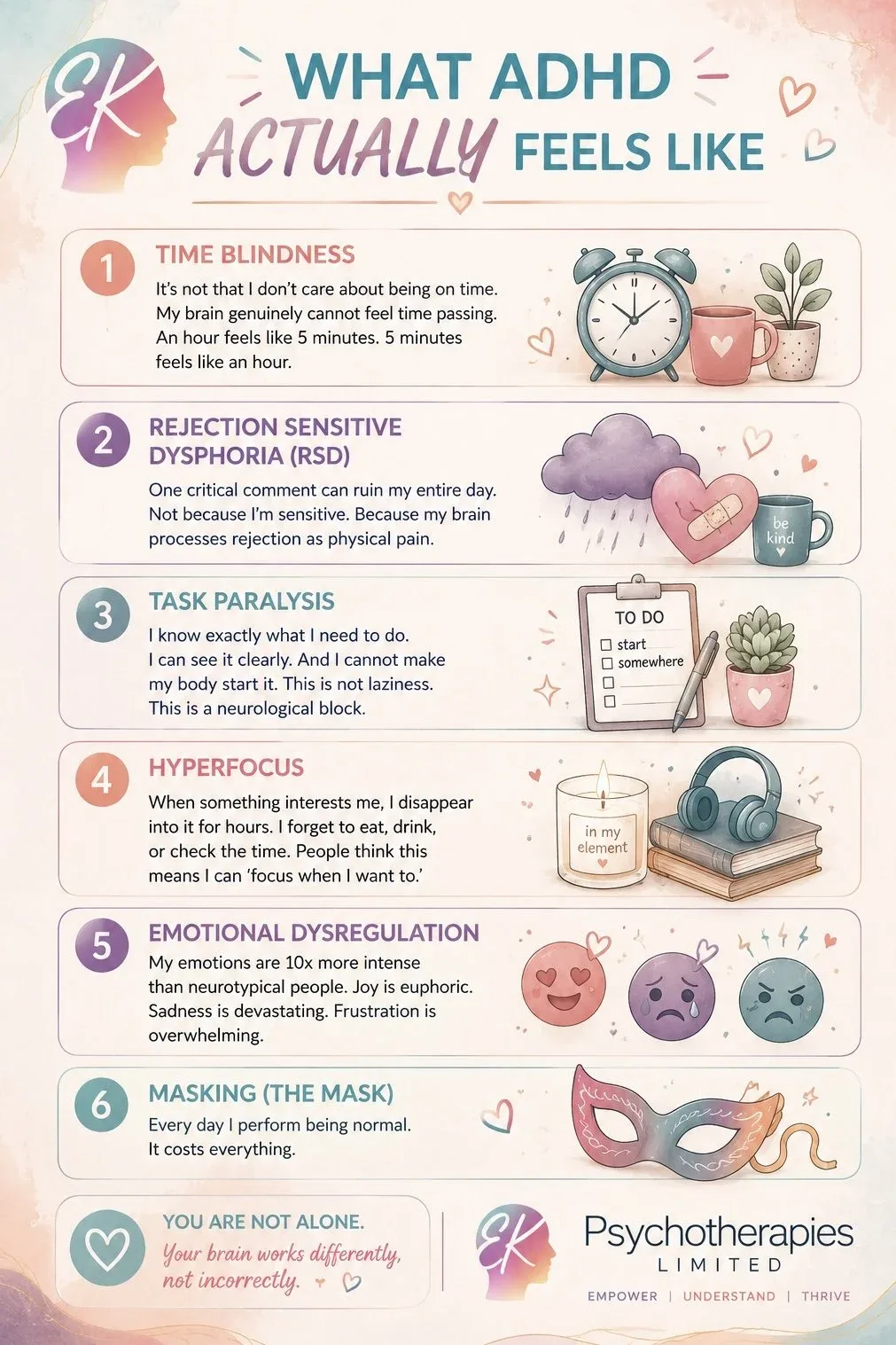
Download infographicTime blindness, rejection sensitive dysphoria, task paralysis, hyperfocus and more, explained from the inside.
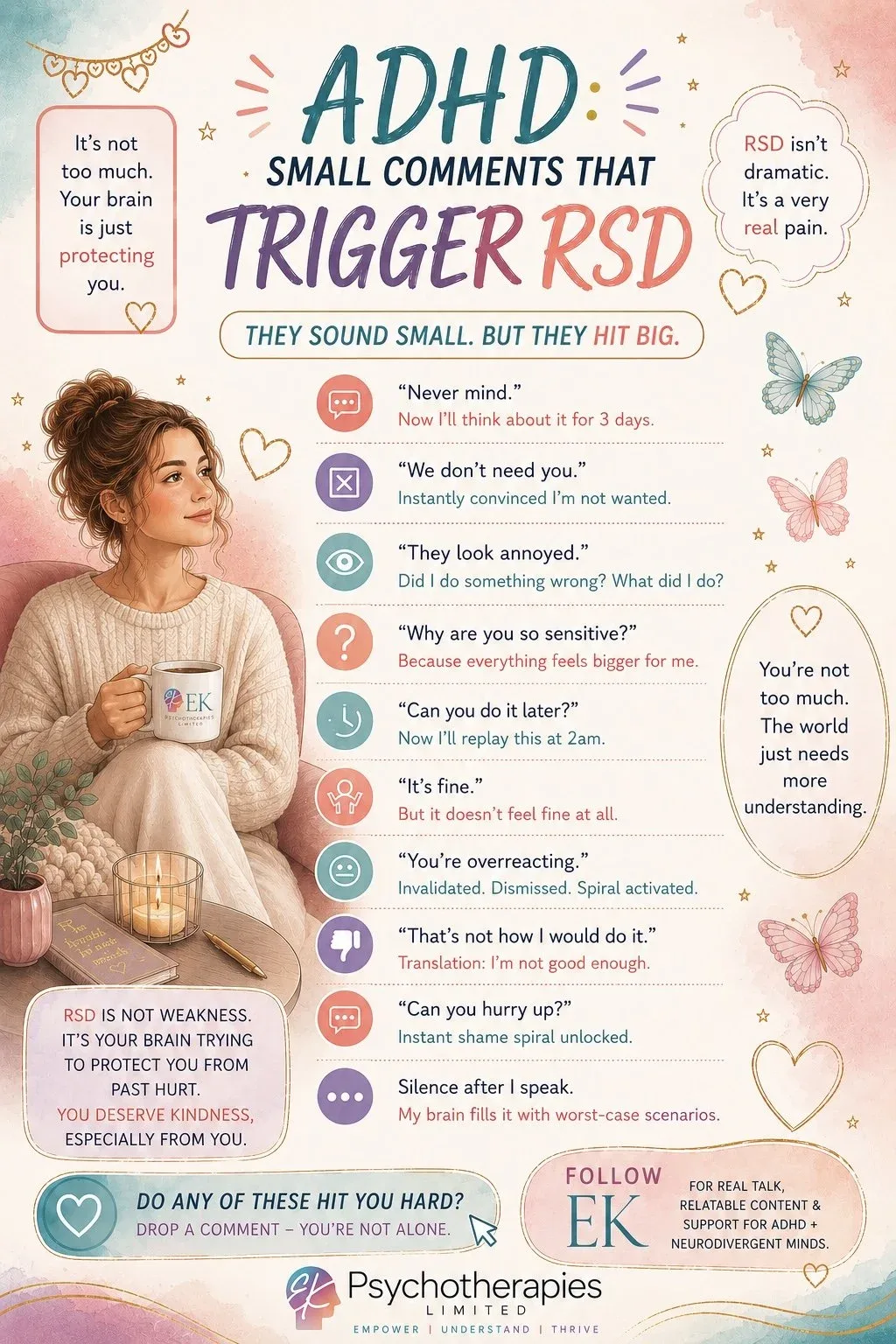
Download infographicThey sound small, but they hit big: everyday comments that can trigger rejection sensitive dysphoria.
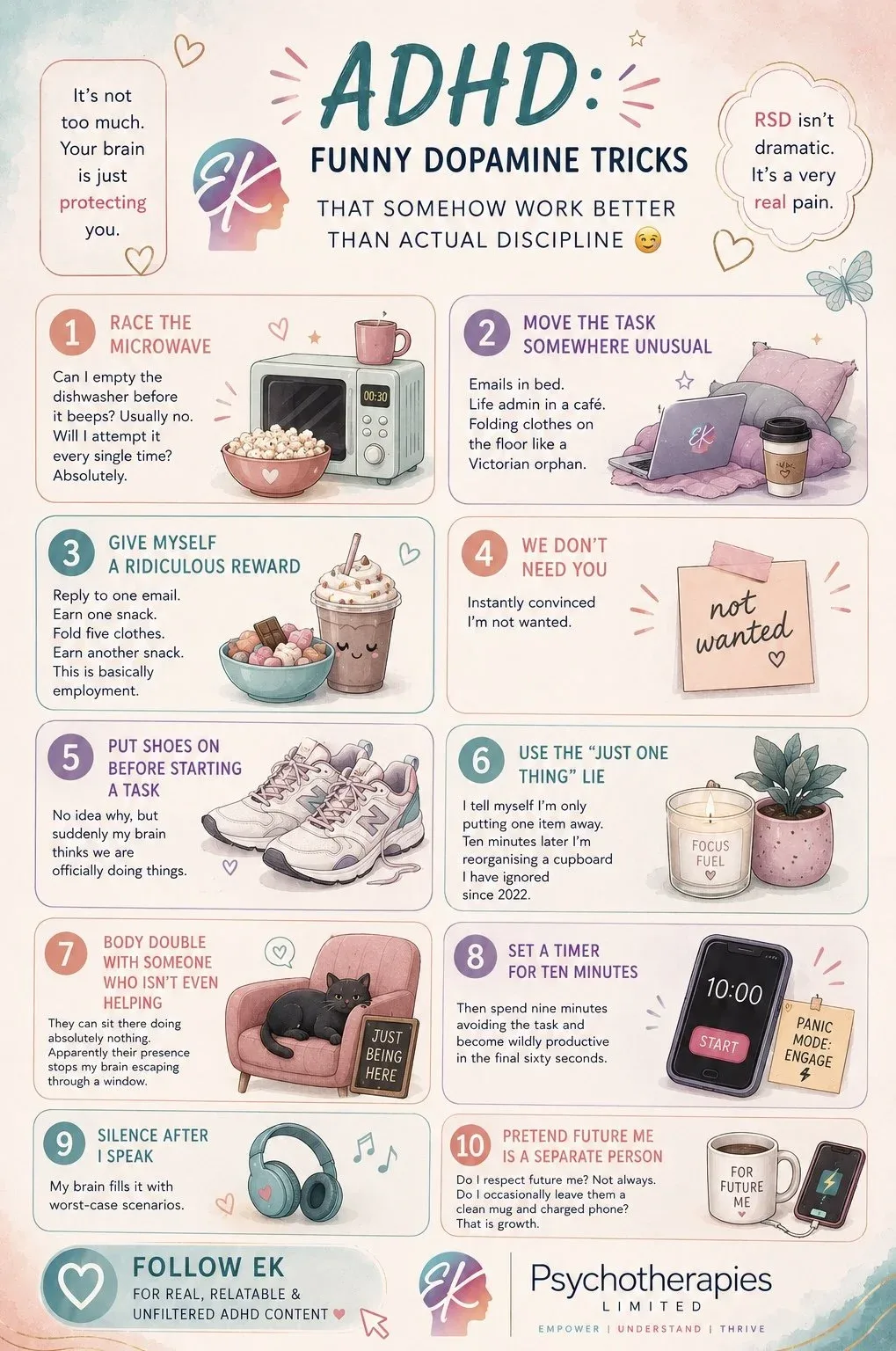
Download infographicPlayful dopamine tricks that somehow work better than actual discipline.
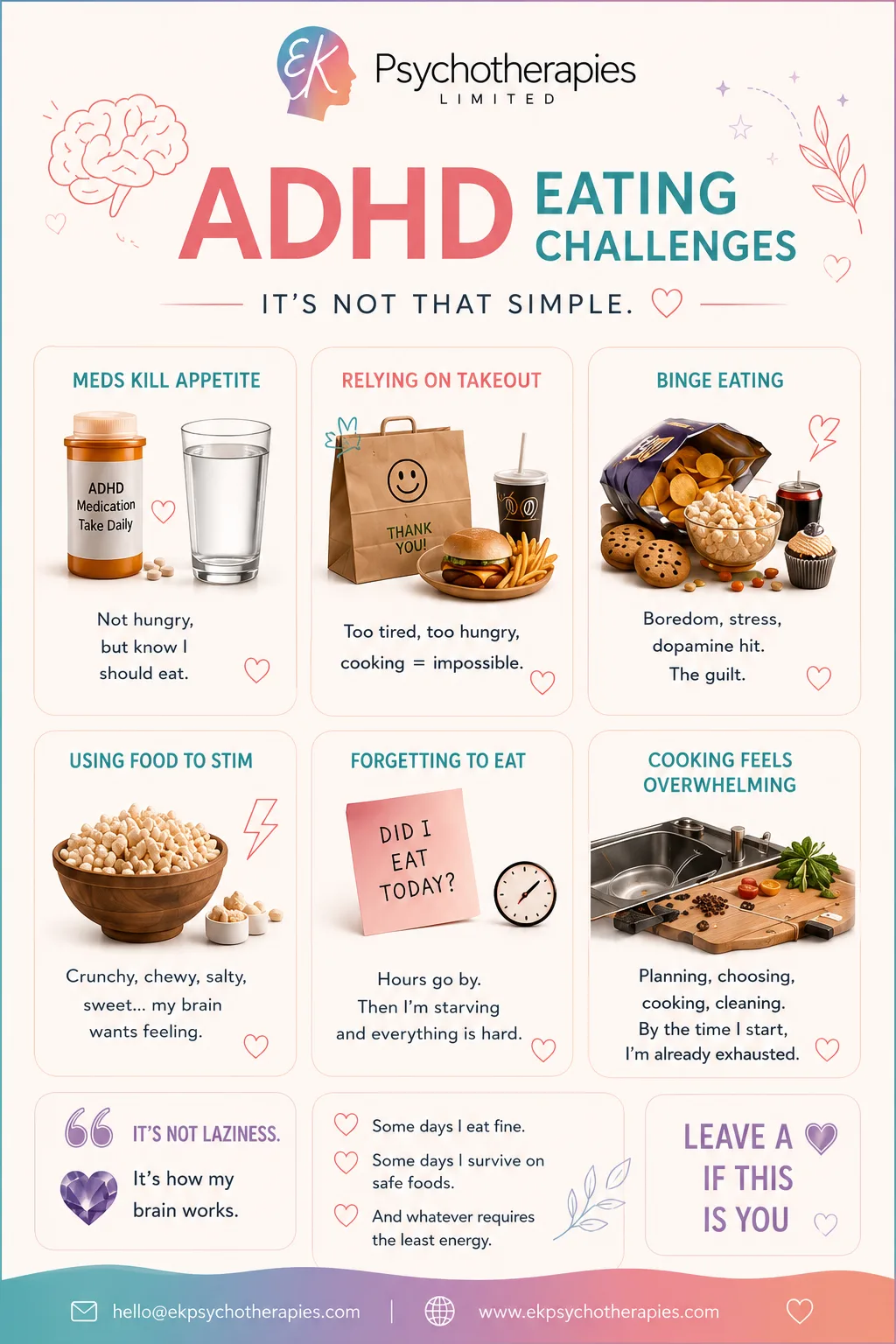
Download infographicWhy eating with ADHD is not that simple: appetite, relying on takeaways, binge eating and more.
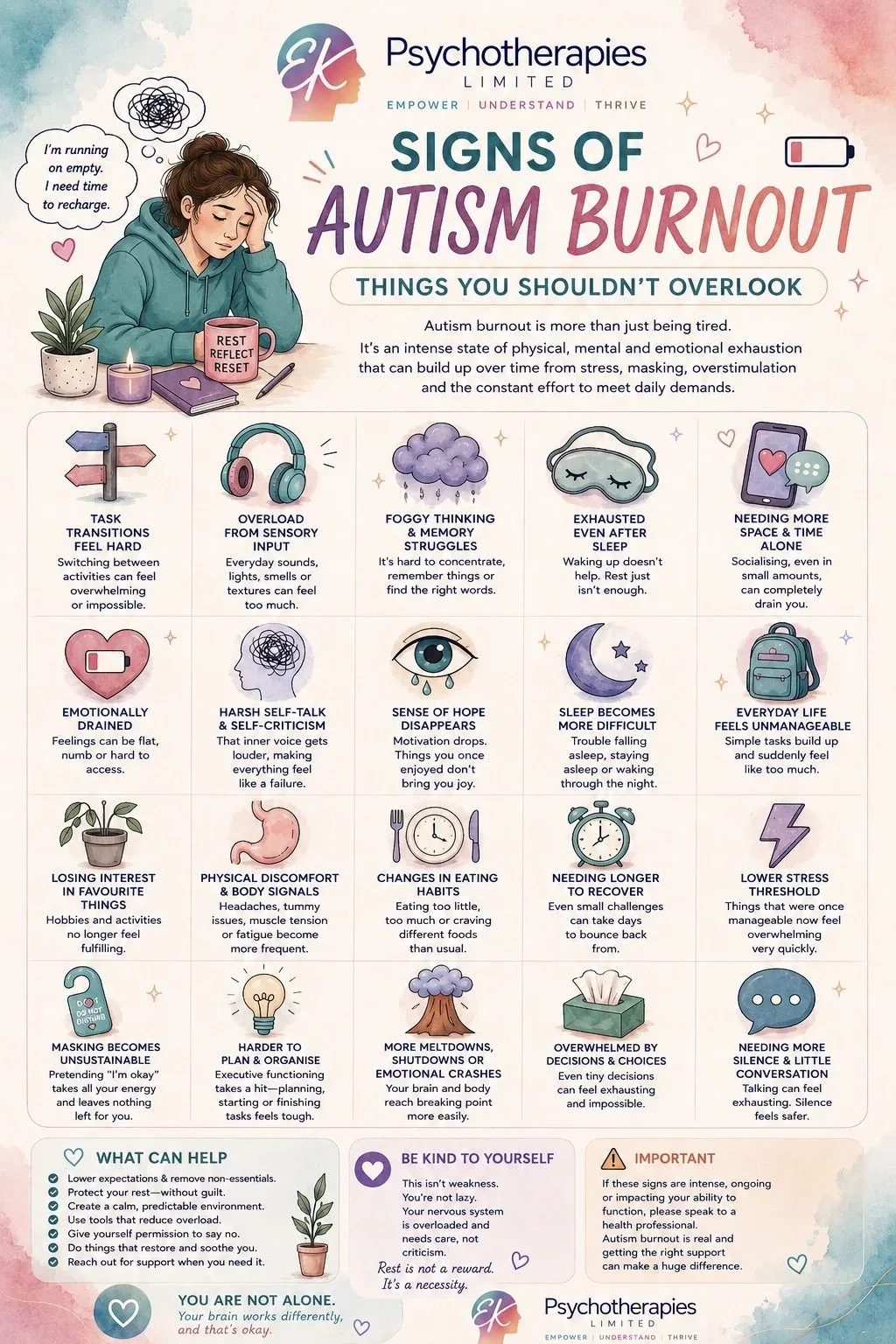
Download infographicAutism burnout is more than just being tired. The signs you should not overlook.
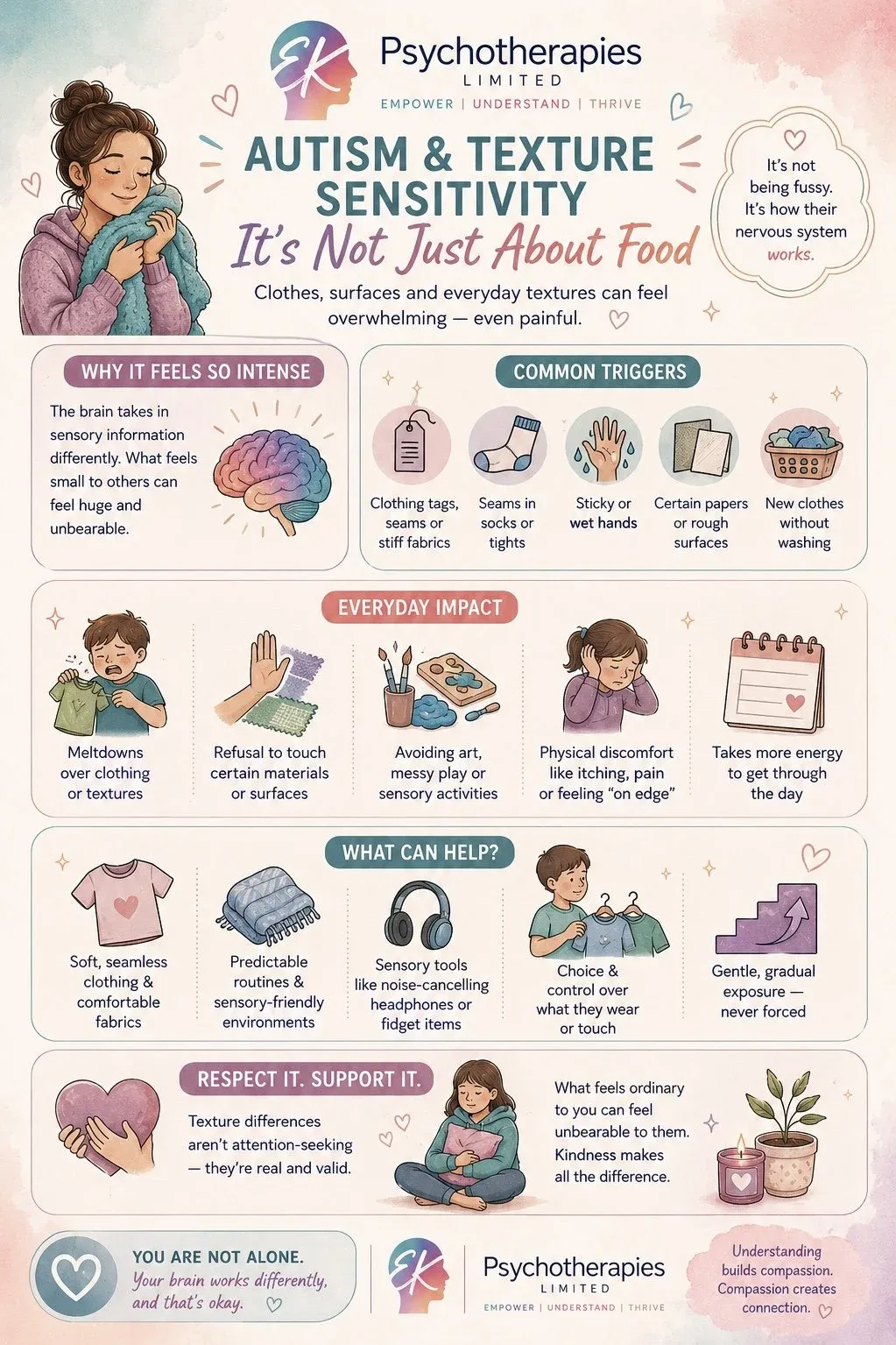
Download infographicIt is not just about food: clothes, surfaces and everyday textures can feel overwhelming, even painful.
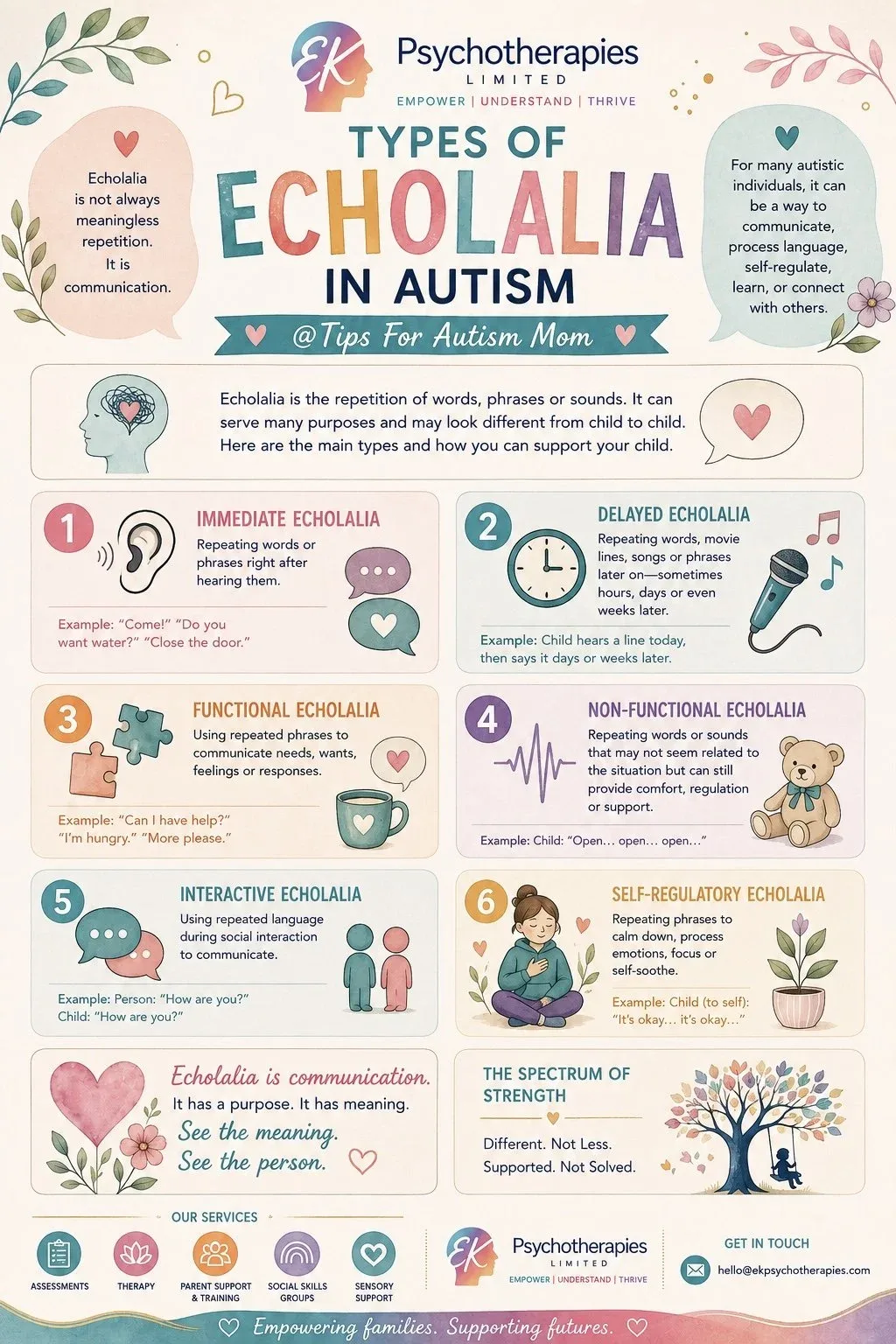
Download infographicEcholalia is the repetition of words, phrases or sounds, and it is a form of communication.
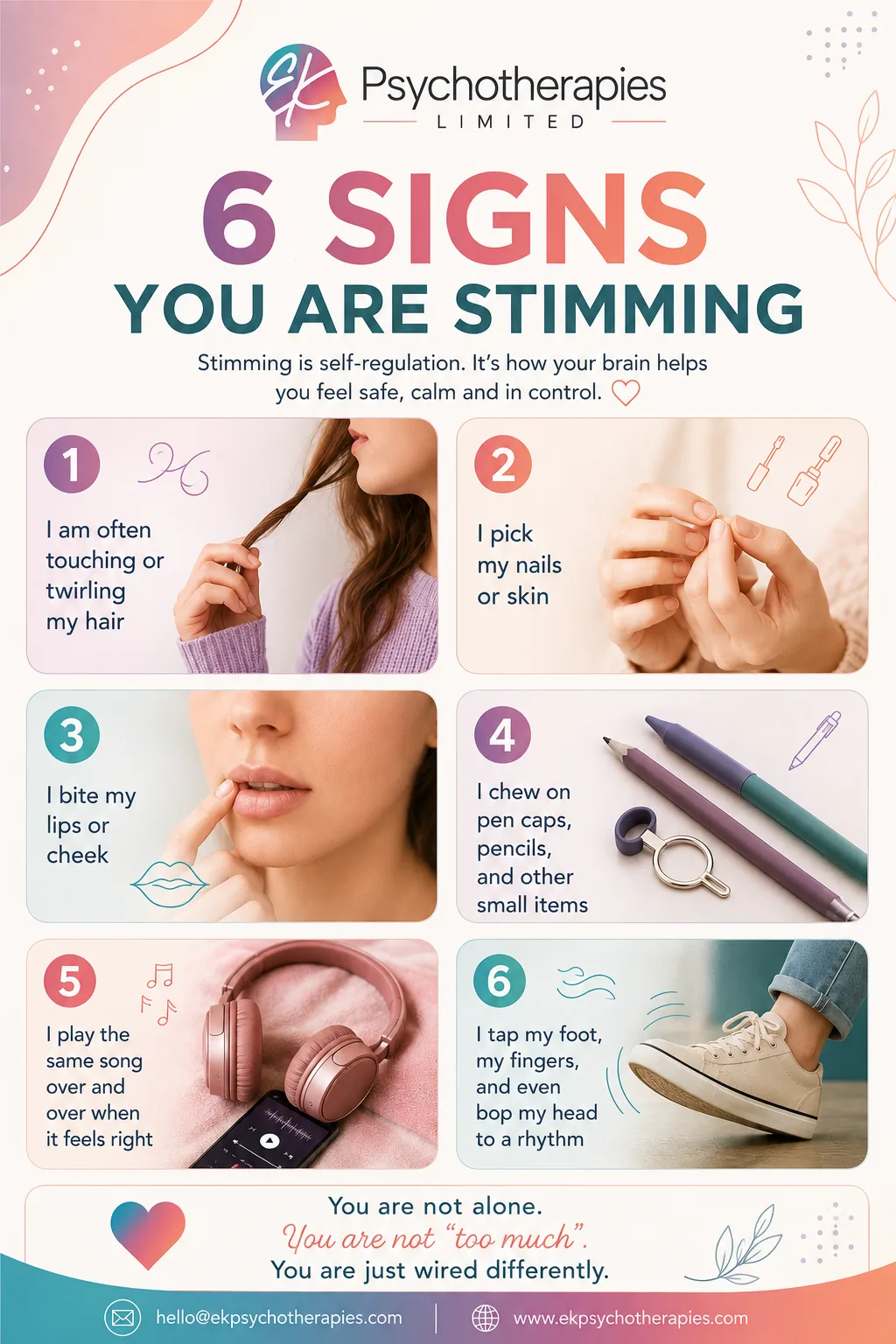
Download infographicStimming is self-regulation. It is how your brain helps you feel safe, calm and in control.
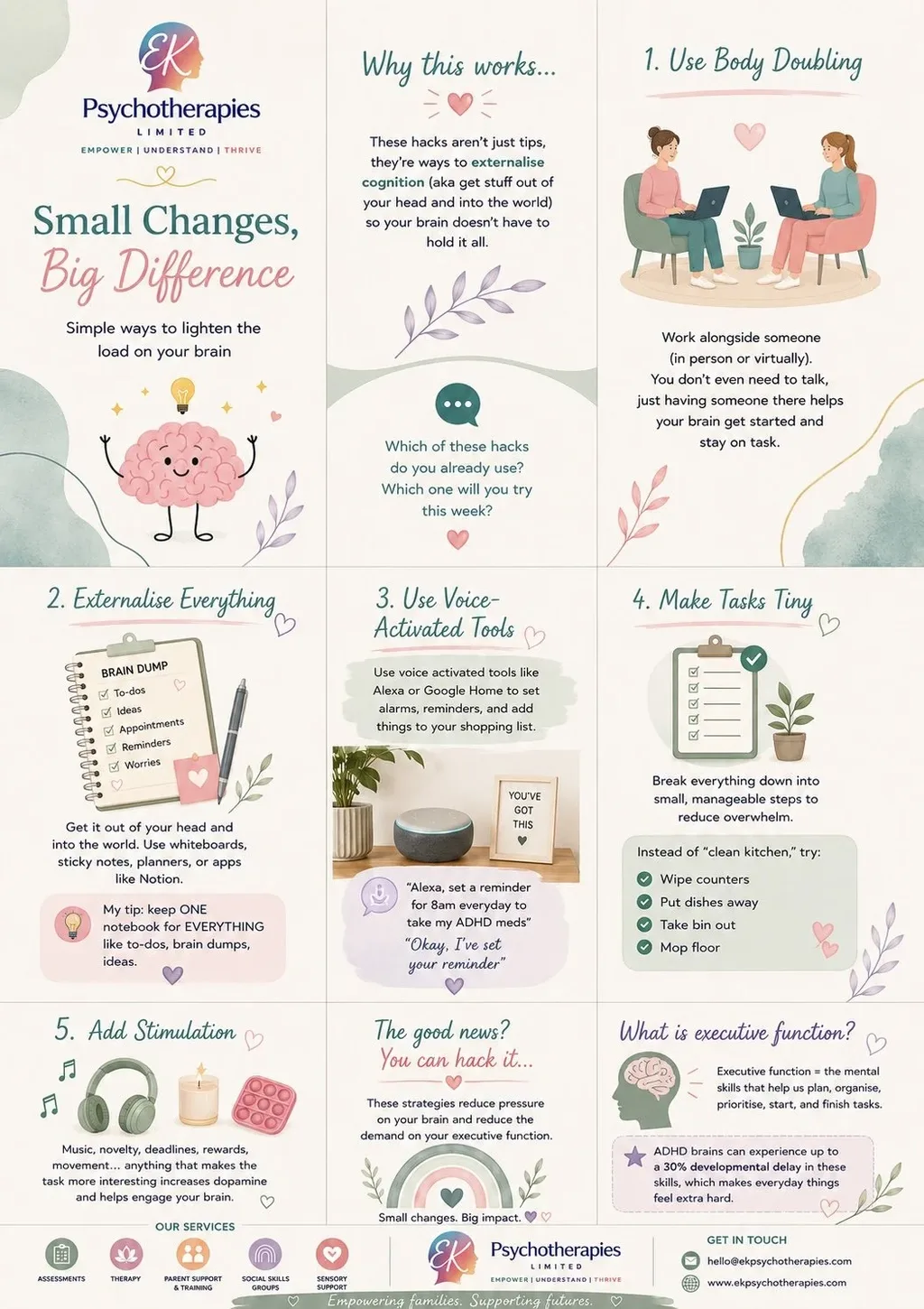
Download infographicSimple ways to lighten the load on your brain, from body doubling to externalising tasks.
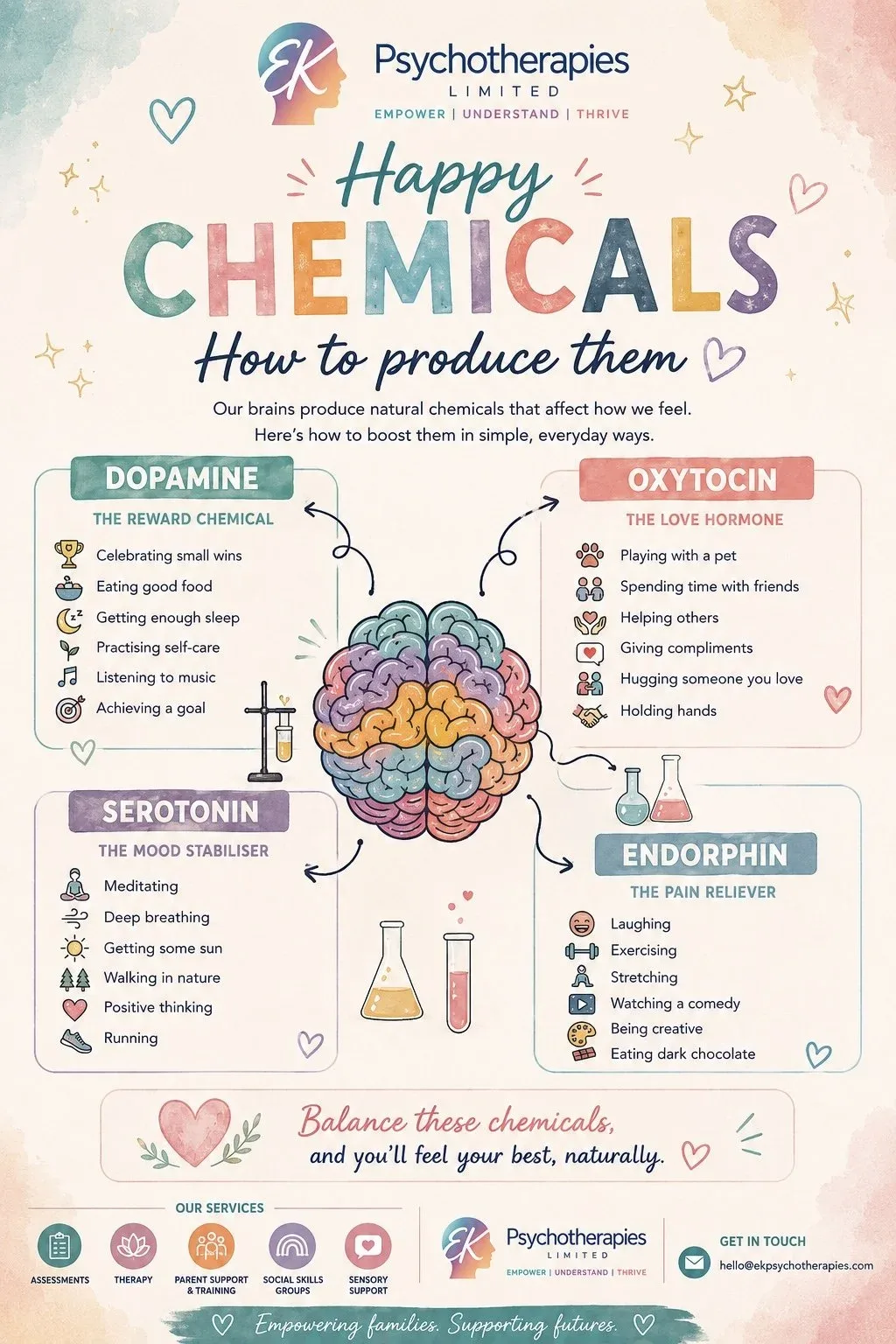
Download infographicOur brains produce natural chemicals that affect how we feel. Dopamine, oxytocin, serotonin and endorphins, and how to boost them.
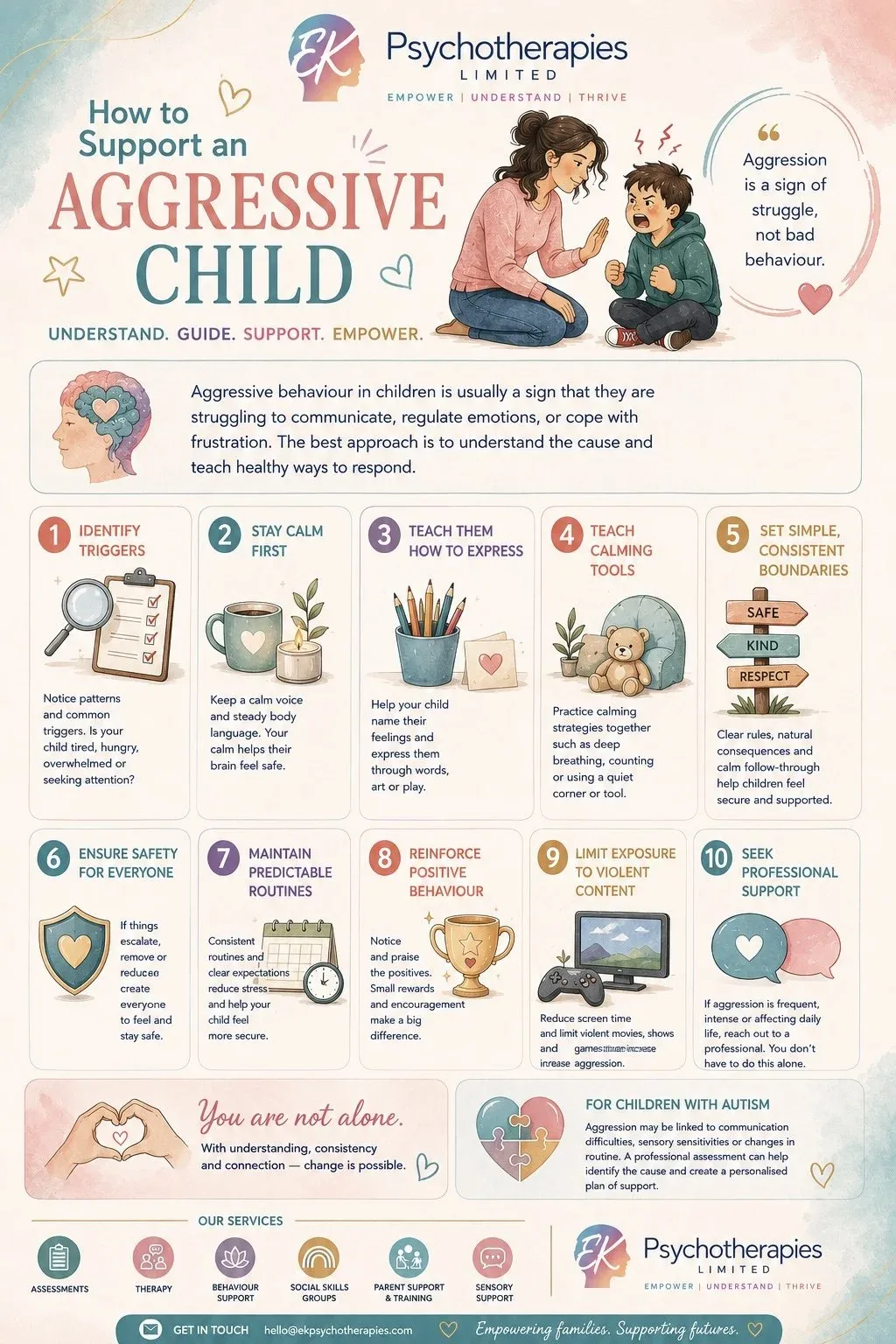
Download infographicAggression is a sign of struggle, not bad behaviour. How to understand, guide and support your child.
Download infographicOur assessments are for children from age 8, young people and adults.
50–60 minutes, remote, completed by our HCPC-registered clinical or counselling psychologists. £180, taken off your assessment fee if you go ahead. You can change or cancel up to 48 hours before your appointment.
ADHD, Autism or Both?
Not ready to book yet? Get our free guide to read in your own time.
Get the free guide